A toy in every cereal box: boxes to buy, on average, to get the whole set
A set of 6 takes 14.7 boxes on average, like rolling a die until every face has shown. A set of 40 takes 171: with one toy missing, each box has a 1 in 40 chance of holding it.
What does this axis measure?
Boxes to complete the set (count)
What does this axis measure?
Toys in the full set (count)
Reveal the axesHide the axes
- y ↑
- Boxes to complete the set (count)
- x →
- Toys in the full set (count)
Show the story, the data and the sourceHide the story, the data and the source
The data: 40 points
| Toys in the full set (count) | Boxes to complete the set (count) |
|---|---|
| 1 | 1 |
| 2 | 3 |
| 3 | 5.5 |
| 4 | 8.3 |
| 5 | 11.4 |
| 6 | 14.7 |
| 7 | 18.1 |
| 8 | 21.7 |
| 9 | 25.5 |
| 10 | 29.3 |
| 11 | 33.2 |
| 12 | 37.2 |
| 13 | 41.3 |
| 14 | 45.5 |
| 15 | 49.8 |
| 16 | 54.1 |
| 17 | 58.5 |
| 18 | 62.9 |
| 19 | 67.4 |
| 20 | 72 |
| 21 | 76.6 |
| 22 | 81.2 |
| 23 | 85.9 |
| 24 | 90.6 |
| 25 | 95.4 |
| 26 | 100.2 |
| 27 | 105.1 |
| 28 | 110 |
| 29 | 114.9 |
| 30 | 119.8 |
| 31 | 124.8 |
| 32 | 129.9 |
| 33 | 134.9 |
| 34 | 140 |
| 35 | 145.1 |
| 36 | 150.3 |
| 37 | 155.5 |
| 38 | 160.7 |
| 39 | 165.9 |
| 40 | 171.1 |
- Ran in puzzle #59 on November 24, 2026. Play it
More like this
-
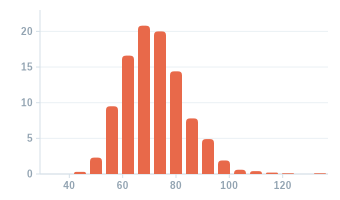 Resting pulse of U.S. adults 20 and over, 2017–2018: bars of 6 beats per minute
Share of adults (%) ↑
Resting pulse (beats per minute) →
-
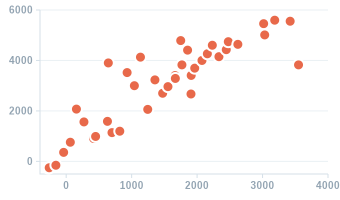 Melting and boiling points of 40 chemical elements
Boiling point (°C) ↑
Melting point (°C) →
-
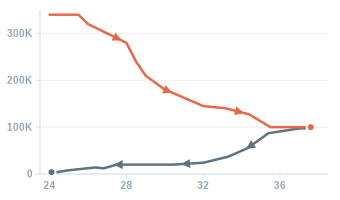 Napoleon's march on Moscow and back, 1812, after Charles Minard's 1869 chart
Napoleon's army (soldiers) ↑
Longitude (degrees east) →
-
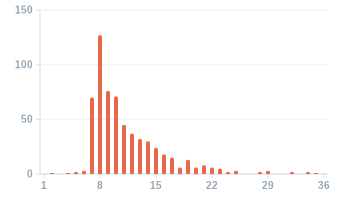 Deaths from cholera around London's Broad Street pump, August–September 1854
Cholera deaths near Broad Street (count) ↑
Time since August 25, 1854 (days) →
-
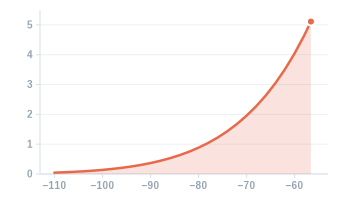 Dry ice: how its vapor pressure climbs as it warms
Vapor pressure of dry ice (atm) ↑
Temperature (°C) →
-
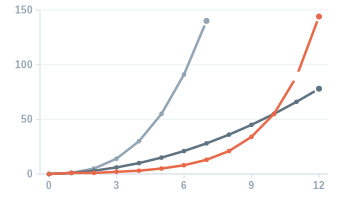 Three number sequences share the value 55
Term value (number) ↑
Position in the sequence (number) →